
Our services
Motor energy surveys, IE4 PMSM motor conversion, motor modernisation and verification of savings.
We measure first
Decisions based on measured data, not estimates
We record your motor at its panel during normal production. Idle, part-load and full-load periods, active and reactive power are captured second by second.
From this recording we calculate the motor's real losses, how much a PMSM would save and how quickly the investment would pay back, motor by motor.

The measurement behind the savings figure
3-phase power analyser
Chauvin Arnoux power and energy analyser recording current, voltage, active / reactive / apparent power, power factor and harmonics (THD).
Rogowski current probes
Flexible coils wrap around the supply cable. No cable is disconnected and the machine keeps running.
Second-by-second logging
One sample per second, covering at least one full working cycle of the machine: from one hour to several days.
Operating states
The recording is split into idle, part-load and full-load states, each with its own duration and power.
Standards-based loss model
Motor losses are split into load-independent and load-dependent parts following IEC 60034-2-1; drive losses are included on the PMSM side.
Verification after conversion
The same measurement is repeated after the conversion and savings are reported in kWh, cost and CO₂.
We measure, predict and report the saving rate
Measurement data alone is not a result. We process every recording in our in-house analysis software and state the saving rate before any conversion.
We record the motor at its panel, second by second, during production.
Our software simulates the same duty profile with a PMSM and drive and calculates the new power for each operating state.
We report annual kWh, cost and CO₂ savings, the saving rate and the payback period.
Our in-house analysis software
- Reads analyser recordings directly and processes thousands of seconds of data in minutes.
- Automatically separates idle, part-load and full-load periods and shows the energy share of each.
- Calculates losses following IEC 60034-2-1.
- Quantifies the effect of reducing speed while idling, showing where the saving comes from.
- The same method is used in every project, so results are comparable and repeatable.
Why it matters: estimate-based calculations either overstate savings or miss the opportunity. A prediction built on measured data lets you decide on the investment with numbers, and the result is verified by the same measurement after conversion.
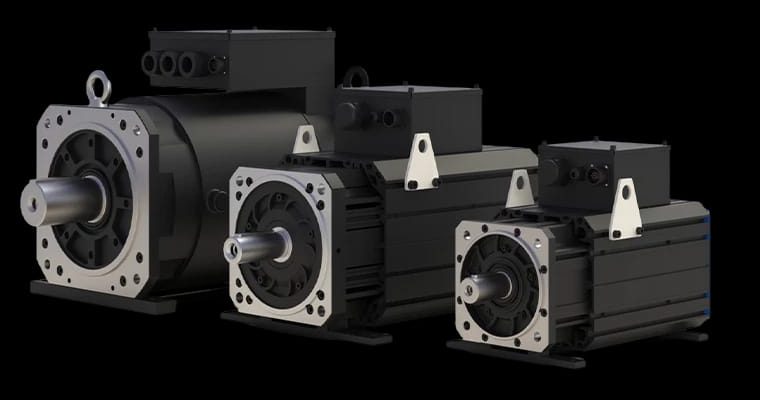
PMSM motor conversion
We replace induction motors with IE4 permanent magnet synchronous motors (PMSM) and a matching drive. The motor is sized to the measured peak torque, not oversized.
- Power and speed selection based on measurement (1000 / 1500 / 3000 rpm)
- Mechanical fit, coupling, installation and commissioning
- Speed reduction while idling for additional savings
- Verification measurement after conversion
Motors, drives and automation products
We supply the motors, drives, switchgear and automation products used in our conversion projects.
- IE4 PMSM motors
- Cumark ES series drives
- Schneider Electric and Telemecanique products
- Catalogues and manuals available for download
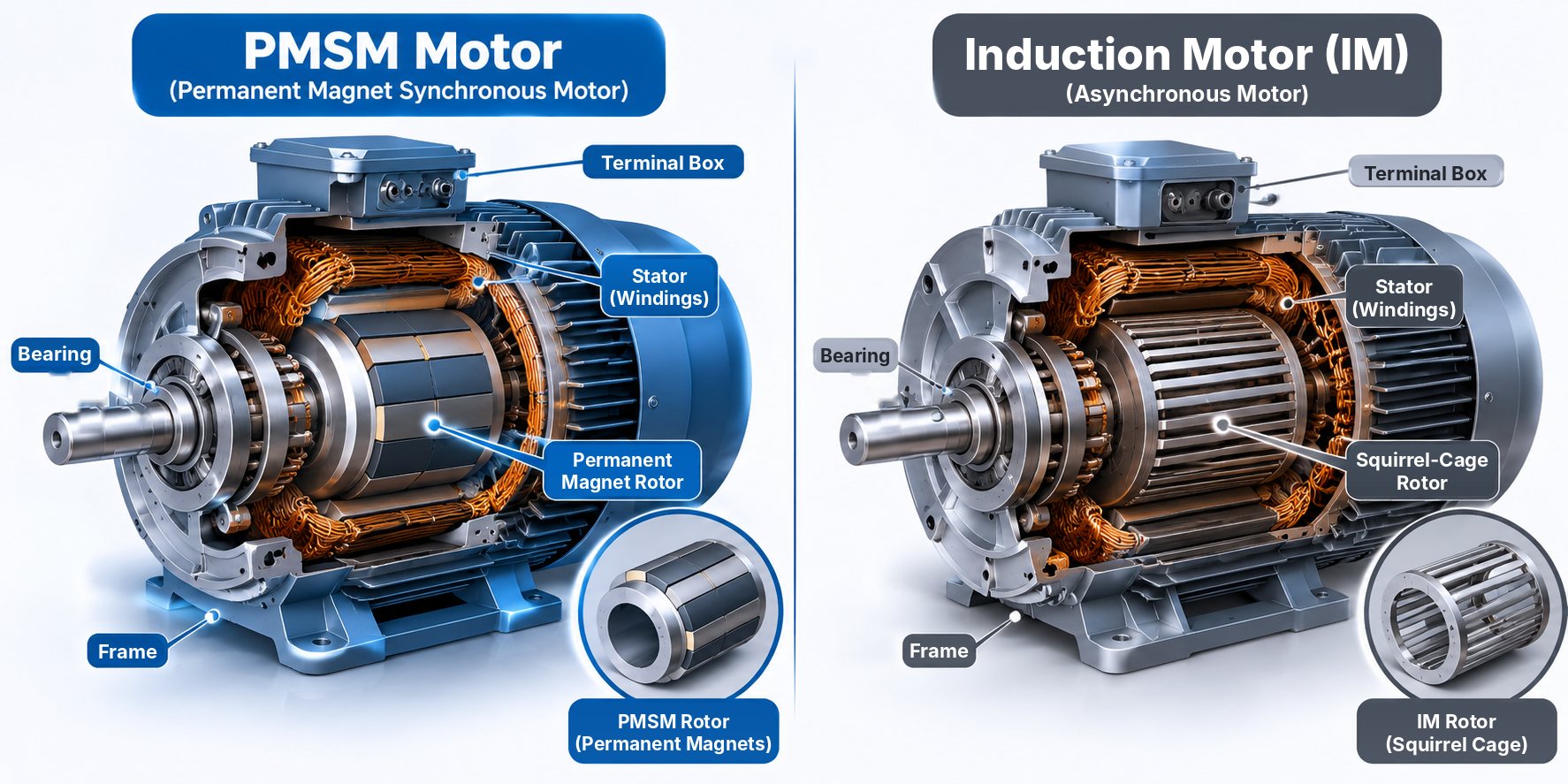
PMSM and induction motor side by side
Both motors have a similar stator; the difference is the rotor. A PMSM rotor carries permanent magnets, an induction motor rotor has squirrel-cage bars. With no rotor current, a PMSM has no rotor losses.
Power factor (cosφ)
Energy consumption
Values are averages of our measurements before and after conversion. Results vary from plant to plant; the most reliable way is to start by measuring your existing motor. In our measured billet shear project: 25.8% less energy, cosφ 0.49 → 0.95 →
Free initial assessment for your motors
Tell us about your largest or longest-running motors and we will estimate the savings potential.